Managing California Income Taxes With Trusts
California clients often ask whether there is any way to eliminate, reduce, or at least defer that exorbitant California income tax. The answer is yes, in many situations, through the proper use of trusts. And the potential savings are not insignificant. For example, via a properly constructed non-grantor trust, over $100,000 of California tax can be saved on a $1 million long-term capital gain! This article summarizes the rules and offers planning ideas...
About the Authors
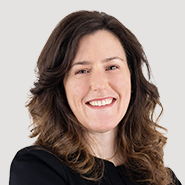
Jennifer E. Reefe is an Associate in Young Conaway Stargatt & Taylor, LLP's Business Planning and Tax Section. She advises individuals or couples looking for estate planning services such as wills, powers of attorney, healthcare directives, revocable and irrevocable trusts. Owners of corporations, partnerships, limited partnerships (LPs), or limited liability companies (LLCs) seek Ms. Reefe's counsel with entity formation, tax issues, and ongoing transactions through dissolution. Those in need of more complex wealth transfer planning turn to Ms. Reefe for sophisticated trust and gifting strategies often involving directed trusts, silent trusts, Spousal Lifetime Access Trusts (SLATs), and related income, estate, gift, and GST tax planning. Ms. Reefe earned her J.D. degree, with honors, from Emory University School of Law and is admitted to the practice of law in Delaware.
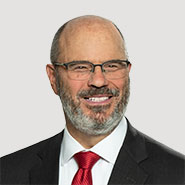
Richard W. Nenno is a Senior Counsel in Young Conaway Stargatt & Taylor, LLP’s Business Planning and Tax Section. He is a Fellow of the American College of Trust and Estate Counsel (ACTEC), a member of the Advisory Committee of the Heckerling Institute on Estate Planning, a Fellow of the American Bar Foundation, a member of the Bloomberg BNA Estates, Gifts, and Trusts Advisory Board, and a member of the National Association of Estate Planners & Councils Hall of Fame. With nearly 50 years of estate-planning experience, Mr. Nenno is recognized as a national speaker and published authority on estate-planning issues. He is a cum laude graduate of Princeton University with an A.B. degree from the Woodrow Wilson School of Public and International Affairs. Mr. Nenno earned his J.D. degree from Harvard Law School and is admitted to the practice of law in Delaware and Pennsylvania.